Workflow builder & case management
Enabling standardization of cases across a company’s claim assessors — without taking away the flexibility a real case needs.
- Role
- Product designer — end to end
- Industry
- Insurance & claims · Regulated
- Surface
- Web platform, B2B multi-tenant
- Scope
- Research → definition → UX/UI → specs → QA
 Workflow builder canvas — branching & conditional logic
assets/img/workflow-builder-01.png
Where this started
Cases followed a similar structure between them, while needing to stay flexible enough to absorb a change in any given case — all while sticking to regulation: notification periods, follow-ups, timeframes on milestones, delegations and approvals.
On top of that, everything happening inside a case had to be auditable, with a traceable record of who did what and when.
What needed to be true
Client companies and collaborators needed a way to predefine cases and tasks that a claim handler could follow and stick to, based on regulation and company policy — in a way that was auditable, and that made it easy to prioritise what to do next and what needed their attention.
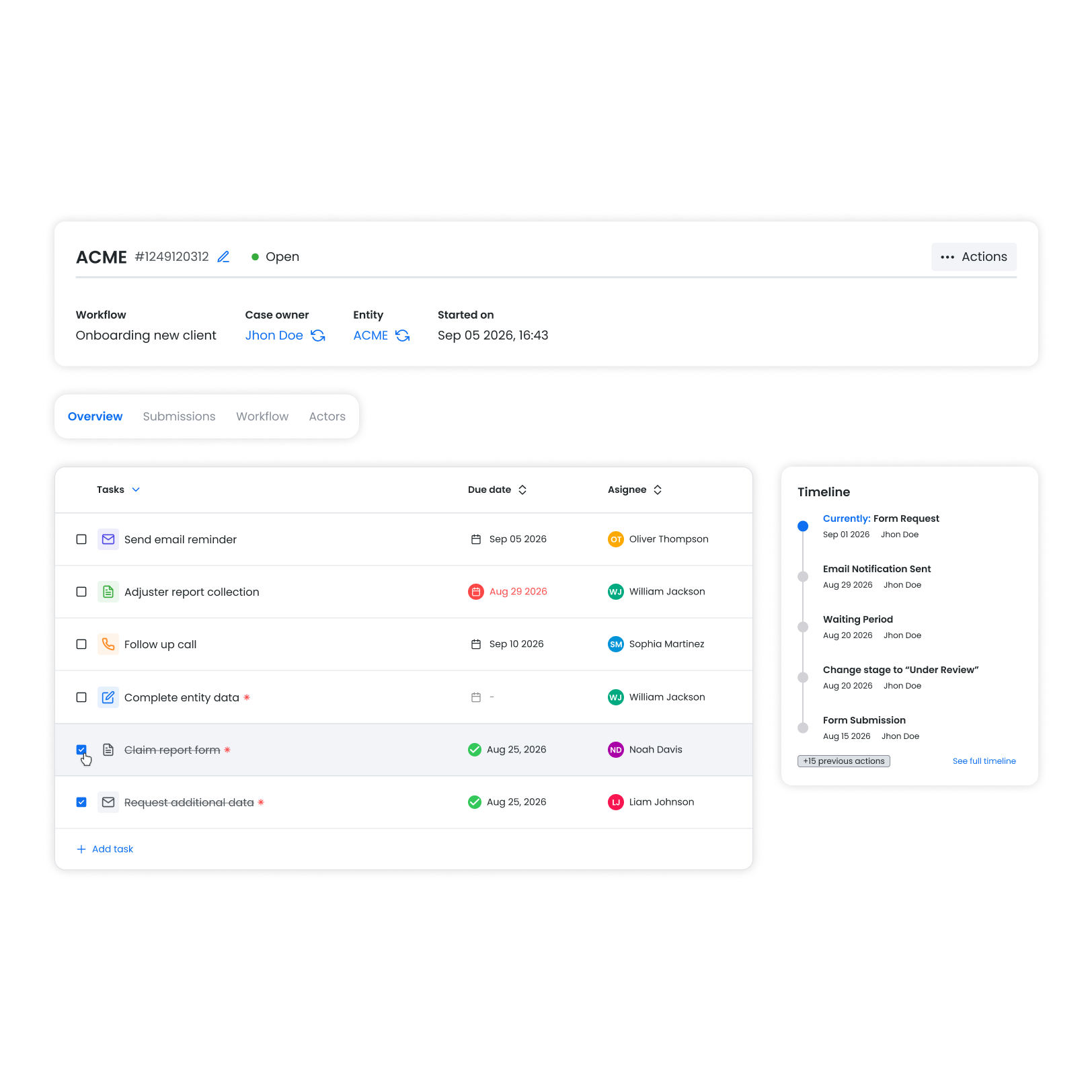 Case view — tasks, timeline and audit log
assets/img/workflow-builder-02.png
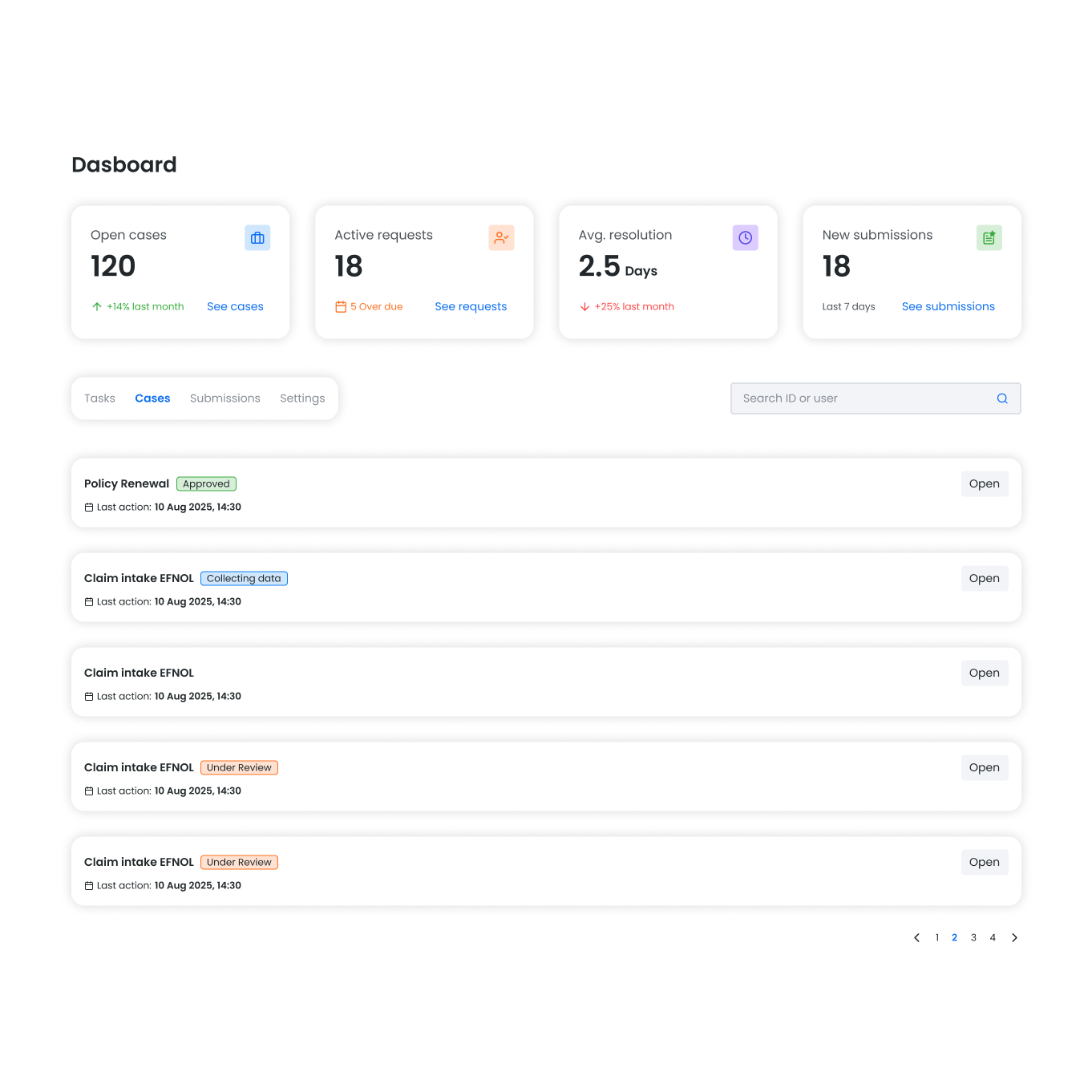 Prioritisation dashboard
assets/img/workflow-builder-03.png
The hard parts
- Complex workflow design and setup of elements for non-technical users — branching, conditional logic, forms, emails, tasks and more
- A case standard driven by the workflow, but with room for flexibility on outstanding cases
- Versioning of workflows, and how a new version affects cases already in flight
- Access, view and action permissions for cases and tasks
- A notifications model for changes and updates inside a case or task
- Event logs for auditing and reporting
- Dashboards for prioritising and filtering work
What we built
A drag-and-drop workflow builder where a company could set up processes for different types of cases: which forms to send, what information to share or request, which person needed to complete a task, when to upload documentation, make a call or send an email.
The builder produced a case that guides its owner through the next right action rather than leaving them to reconstruct the process from memory.
 Workflow versioning states
assets/img/workflow-builder-04.png
What changed
- Standardized processes that guide the case owner without guessing
- A record of every interaction and who was responsible for it, for auditing purposes
- Reduced onboarding time for new case owners — the workflow itself teaches them the next action
- A centralized case environment relating every action and element to one single source of truth
- Less back-and-forth over email and internal messaging, through task assignment and timed follow-up notifications that keep the case within company SLAs